| Speaker | Biography |
Mehdi Behzad
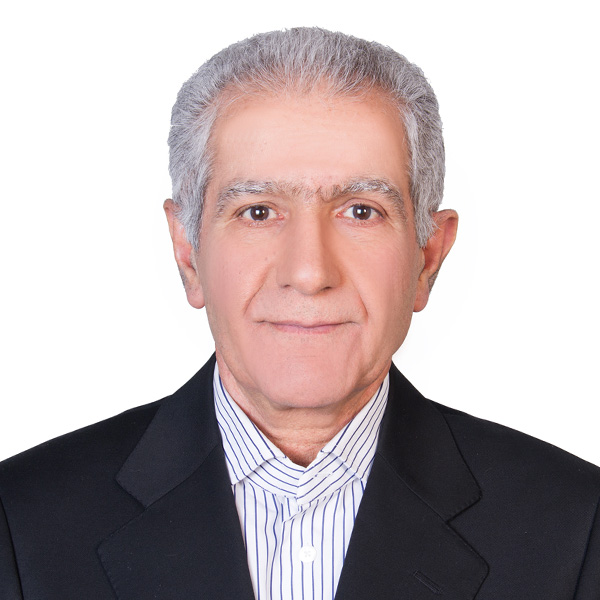
| Mehdi Behzad is currently a professor in the Department of Mechanical Engineering at Sharif University of Technology, where he joined after graduating from the University of New South Wales (UNSW) in 1995. During the last 28 years, he has conducted more than 500 condition monitoring and vibration analysis projects in a variety of industries, such as oil, gas, petrochemistry, power plants, steel, cement, copper, wood and paper as CEO of Behravesh Vibration Engineering.
Mehdi has been the chair and founder of the annual Condition Monitoring and Fault Diagnosis (CMFD) conference since 2007. He has published more than 160 journal articles in the area of CM, rotor dynamics and AI-driven estimation of ball bearing remaining useful life (RUL). He was selected as one of the top distinguished scientists of Iran for his joint academic-industrial activities in 2020. He has supervised more than 20 PhD and 40 MSc theses. In condition monitoring, he has carried out many experiments in order to predict the ball bearing failure using vibration and acoustics signal. He is also the course director of MSc in Maintenance and Condition Monitoring Engineering. |
Dan Brooks

| Dan leads the Advanced Machinery Productivity Institute (AMPI) on behalf of the National Physical Laboratory (NPL), a partnership between industry, local government and universities to stimulate and support growth of the UK’s machinery manufacturing sector. Within this, he is responsible for a £45m innovation programme developing mechanisms for effective research and collaboration, and in particular, innovative funding frameworks. He previously led Advanced Manufacturing strategy at NPL, responsible for research and engagement strategies in areas including digital engineering, validation and verification and large-volume metrology.
He has more than 15 years’ experience in technology innovation, spanning a wide range of engineering sectors, with experience across industry, research, government organisations and the High Value Manufacturing Catapult network.
Alongside a degree in Engineering, Dan holds an MBA from Manchester Metropolitan University, specialising in technology management and adoption, where he conducted an analysis of the barriers and enablers to technology adoption in UK manufacturing and how these barriers can be overcome with support from the UK’s innovation framework. |
Esko Juuso

| Senior Specialist, Esko Juuso, has a DSc (Tech) in Control and Systems Engineering, Technical Faculty at the University of Oulu. He is an Adjunct Professor on Computational Intelligence and a Fellow of the International Society of Condition Monitoring (ISCM). He also has an MSc (Tech) degree in Technical Physics (Material Physics) from the University of Oulu. He has 40 years of experience in industry and joint research projects on intelligent systems applications, including fields of energy, water, environment, bioprocesses, pharmaceuticals, pulp and paper, steel and mining. He is the developer of the non-linear scaling methodology, which is currently used in various applications. His research interests are in the modelling and control of industrial processes with a special emphasis on combining intelligent control, fault diagnosis and performance monitoring into smart adaptive systems (SAS) and cyber-physical systems (CPS). He has been active in Esprit Working Groups and in European Networks of Excellence. His h-index is 26 with 2812 citations. ISCM Fellow Juuso is member of the ISCM Management Committee with an emphasis on publications. In the Scandinavian Simulation Society (SIMS), he has been on the Board since 1996 and the President from 2007-2013. He is a founding member of the Finnish Simulation Forum (FinSim) from 2006 and ISCM since 2010. In the Federation of European Simulation Societies (EUROSIM), he has been a member of the Board since 2006, the Secretary from 2007-2010, the President from 2013-2016 and the organiser of the EUROSIM 2016 Congress. Since 2002, he has chaired various SIMS, EUROSIM, ISCM events and other conferences, organised special sessions and presented plenary and invited talks. In the International Federation of Automatic Control (IFAC), he is an active member of the Industrial Committee and several Technical Committees. |
Jérôme Lacaille

| Jérôme Lacaille is a mathematician and data science expert with extensive experience in academia and industry. A former student of the École Normale Supérieure (1985) and agrégé in mathematics, he was a lecturer at ENS Cachan before moving into applied research.
In 1992, he co-founded Miriad Technologies with Robert Azencott, developing data-mining and statistical tools for industrial applications in aeronautics and semiconductors. He later contributed to Miriad Process, an early graphical data analysis automation tool, and holds two patents in machine tool analysis and factory optimisation.
Since joining Safran Aircraft Engines (formerly Snecma) in 2007, he has played a key role in advancing data-driven decision-making, notably by developing Samanta, a data analysis platform for engine health monitoring. In 2014, he created Safran’s first DataLab, now a benchmark within the group.
Jérôme Lacaille also leads Safran’s Mathematics Network, organises monthly conferences and trains over 30 data analysts per year through the DataClimber program.
In parallel, he is a part-time professor at Université Sorbonne Paris Nord (USPN), vice-president of the Sorbonne Paris Nord Foundation (FSPN), a member of the Agence pour les Mathématiques pour l'Industrie et la Société (AMIES) Scientific Council and former vice-president of Société de Mathématiques Appliquées et Industrielles (SMAI).
|