Automated ultrasonic marine riser integrity management
06/07/2026
Marine risers are among the most critical assets in offshore oil & gas operations, forming the vital connection between subsea systems and surface facilities. Subjected to harsh environmental conditions, internal flow dynamics and mechanical stress, these structures are highly susceptible to degradation mechanisms such as corrosion, fatigue cracking and weld defects. Ensuring their integrity is therefore essential for both operational safety and long-term asset performance.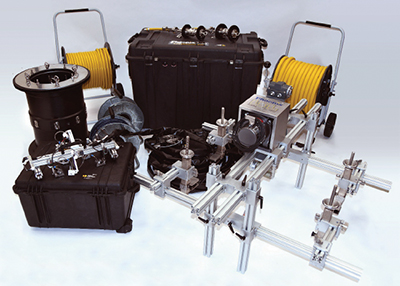 |
A new suite of combined manual and automated inspection technologies developed by Phoenix Inspection Systems Ltd (Phoenix ISL) represents a significant step forward in addressing these challenges. Rather than relying on a single inspection system, the approach deploys multiple specialised scanners, each designed to perform targeted non-destructive testing (NDT) functions. These include ultrasonic testing (UT), phased array ultrasonic testing (PAUT) and time-of-flight diffraction (TOFD), enabling comprehensive, high-resolution inspection across marine risers.
The solution comprises a series of complementary scanners supported by automated deployment and positional encoding technologies. Each scanner is optimised for specific inspection tasks, including internal corrosion mapping, weld inspection and flange assessment across both main bores and auxiliary lines. This modular approach allows for flexible deployment while maintaining precise, repeatable data acquisition.
A key strength of the inspection suite lies in its high-channel immersion UT arrays, which significantly enhance coverage and data density. Configurations of up to 56 probes enable detailed wall thickness measurement and corrosion detection. Advanced probe arrangements, such as spiral configurations, further improve circumferential coverage, reducing the risk of missed localised defects.
For weld inspection, dedicated scanners utilise both PAUT and TOFD techniques to deliver complementary insights. PAUT supports rapid sectorial scanning without mechanical probe movement, while TOFD provides highly accurate defect sizing based on diffracted signals. Integrated visual inspection tools further assist with defect validation and positional correlation.
Validation through laboratory testing and customer field trials has demonstrated that these scanners deliver high-resolution corrosion mapping, improved defect detection and strong repeatability. Compared with traditional inspection methods, this multi-scanner approach is said to offer enhanced reliability, efficiency and coverage, critical advantages in difficult environments where access is constrained and operational downtime is costly.
By combining multiple specialised scanners, this solution represents a significant advance in marine riser integrity management and sets a new benchmark for offshore inspection practices, it is claimed.
Phoenix Inspection Systems
www.phoenixisl.com


